Studies
Research library
Curated academic studies relating to the Latter-day Saint community. Search by keyword, filter by topic, and upvote the ones worth sharing.
73 studies
Wellbeing & Flourishing
 Secondary Analysis2026FlourishingDepression
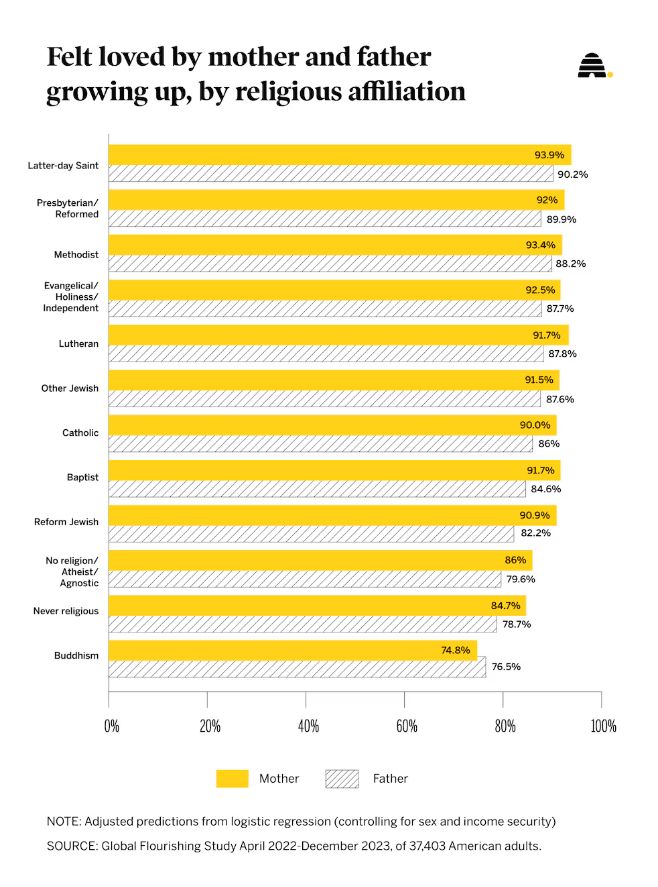
Global Flourishing Study — Latter-day Saint Breakdown
Deseret News Analysis
Analysis of the GFS U.S. data filtered to Latter-day Saint respondents, comparing depression, happiness, attendance, and childhood relationship measures against other religious groups.
Read study →
 Primary Dataset2025FlourishingReligion
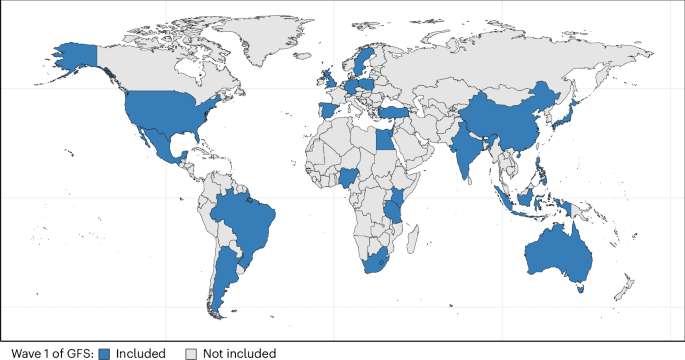
Harvard / Baylor Global Flourishing Study — Flagship Paper
Tyler J. VanderWeele, Brendan Case, Ying Chen
Longitudinal panel of 200,000+ participants across 22 countries, nationally representative, run with Gallup and the Center for Open Science. Measures six domains: health, happiness, meaning, character, relationships, and financial security.
Read study →
 Secondary Analysis2025happinessflourishing
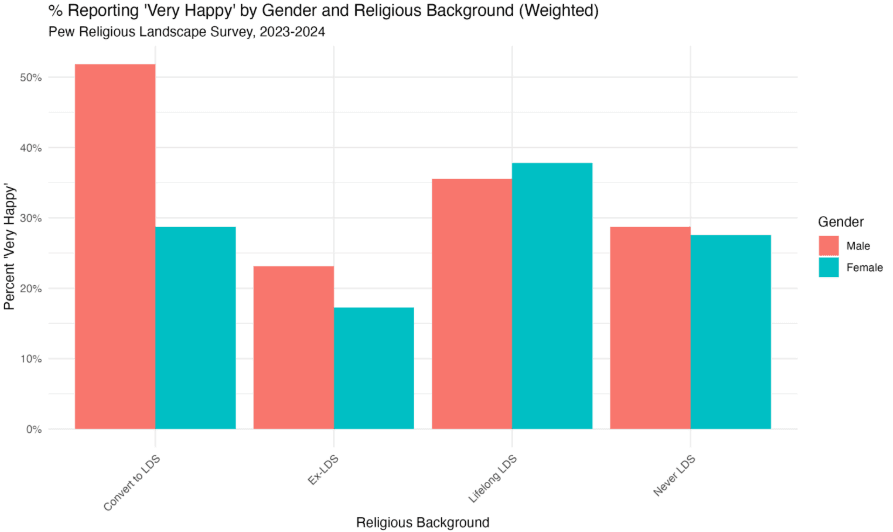
Are Latter-day Saints Happier? The Pew Religious Landscape Survey, Relationship with the Church, and Flourishing
An independent analysis of the 2025 Pew Religious Landscape Survey examining the relationship between active commitment to The Church of Jesus Christ of Latter-day Saints and measures of human flourishing.
Read study →
 Primary Dataset2012WellbeingReligion
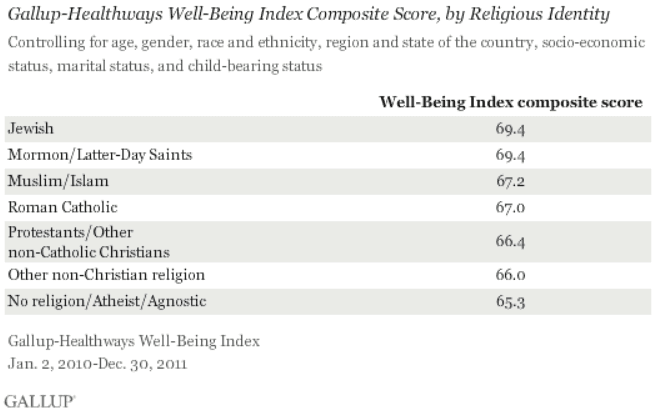
Gallup-Healthways Well-Being Index
Frank Newport, Dan Witters
676,000+ interviews measuring wellbeing by religiosity and faith group with demographic controls.
Read study →
Mental Health
- Study2024scholarship
BYU Studies, Volume 63 Issue 4
Latter-day Saint scholarship issue (2024) — articles include Ogletree's work on perfectionism and adolescent mental health.
Read study →
 AI · not from studyStudy2024PerfectionismMental Health
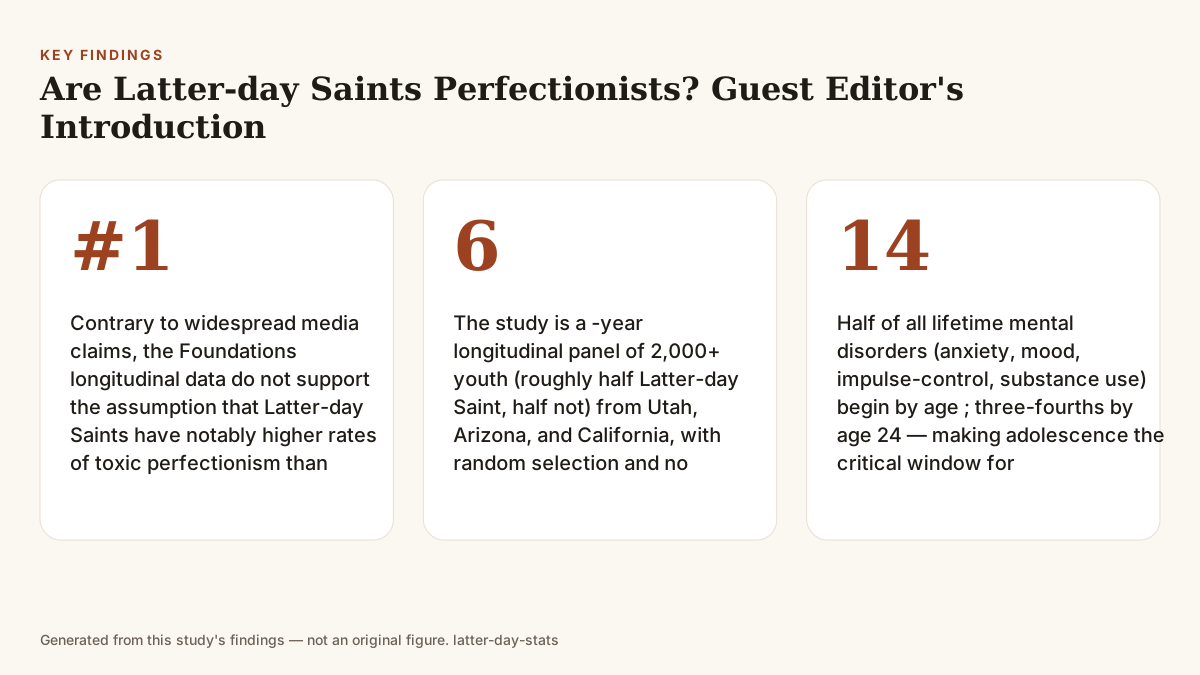
Are Latter-day Saints Perfectionists? Guest Editor's Introduction
W. Justin Dyer
Introduction to a special issue on perfectionism among Latter-day Saints, reporting key findings from the Foundations longitudinal study — a six-year panel of 2,000+ youth (approximately half Latter-day Saint, half not) from Utah, Arizona, and California. Dyer challenges the widespread assumption that Latter-day Saints are a "notoriously perfectionistic population," presenting data showing the narrative does not match the evidence. Introduces the concept of healthy vs. toxic perfectionism and outlines how the issue's articles address causes, consequences, and clinical treatment.
Read study →
 AI · not from studyStudy2024PerfectionismMental Health
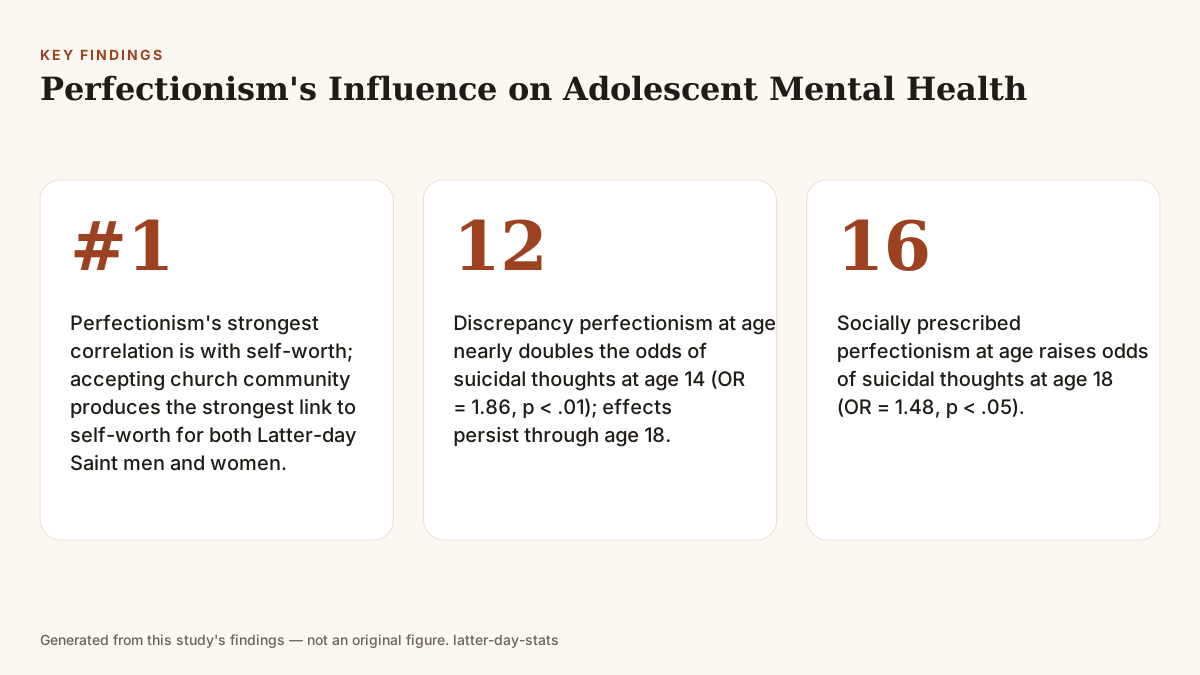
Perfectionism's Influence on Adolescent Mental Health
Mark D. Ogletree
Examines the relationship between toxic perfectionism and six adolescent mental-health outcomes — anxiety, depression, self-worth, suicidal ideation, video-game addiction, and pornography use — using Foundations longitudinal data. Uses cross-lagged models to assess whether perfectionism precedes or follows these outcomes. Finds perfectionism is a significant predictor of later suicidal ideation across multiple age points, with self-worth as the strongest correlate. Situates findings within Latter-day Saint theological context, arguing that a grace-centered understanding of the gospel reduces toxic perfectionism.
Read study →
- Study2024mental-healthyouth
Perfectionism's Influence on Adolescent Mental Health
Mark D. Ogletree
Mark D. Ogletree examines how perfectionism affects adolescent mental health in Latter-day Saint contexts. Findings include that LDS suicide ideation rates are lower than commonly assumed, alongside related discussion of pornography exposure and mental health.
Read study →
 AI · not from studyStudy2024PerfectionismAdolescence
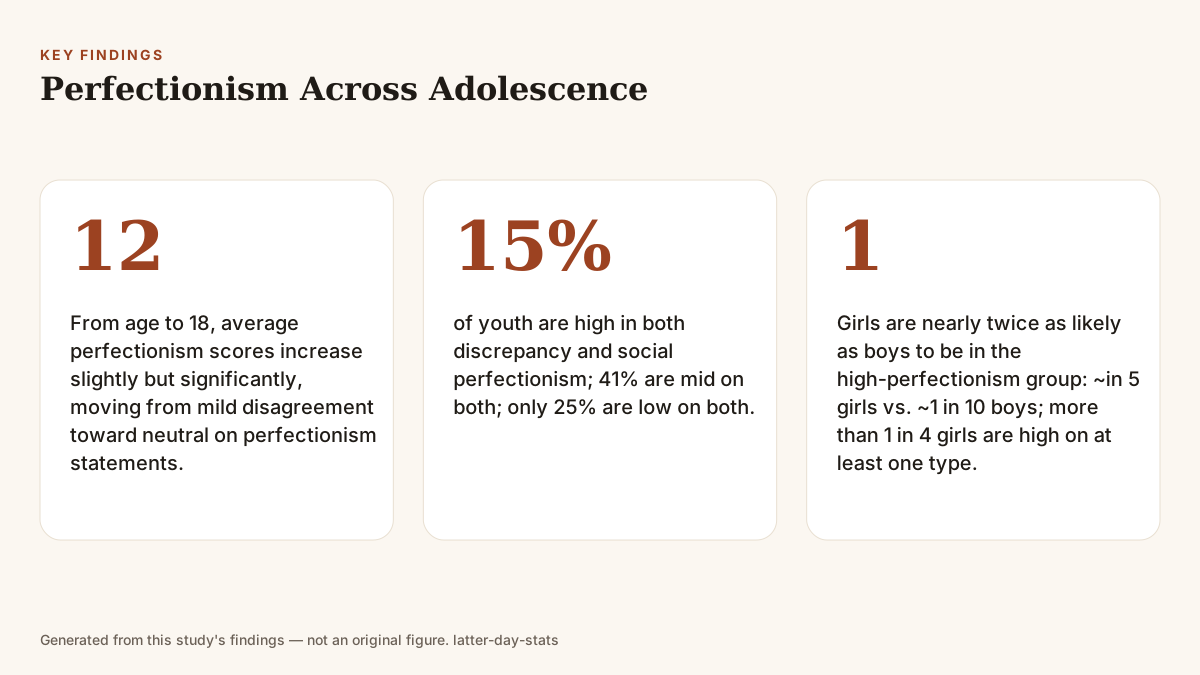
Perfectionism Across Adolescence
W. Justin Dyer
Longitudinal analysis of how perfectionism changes from age 12 to 18 using the Foundations study panel. Examines prevalence, trajectories, gender differences, state-level variation (Utah, Arizona, California), and differences by sexual/gender minority (SGM) status. Finds that while most adolescents fall in moderate ranges, a meaningful minority show high toxic perfectionism, with significant disparities by gender and identity. Explores social media and choice overload as cultural contributors to rising perfectionism rates.
Read study →
 AI · not from studyStudy2024PerfectionismReligion
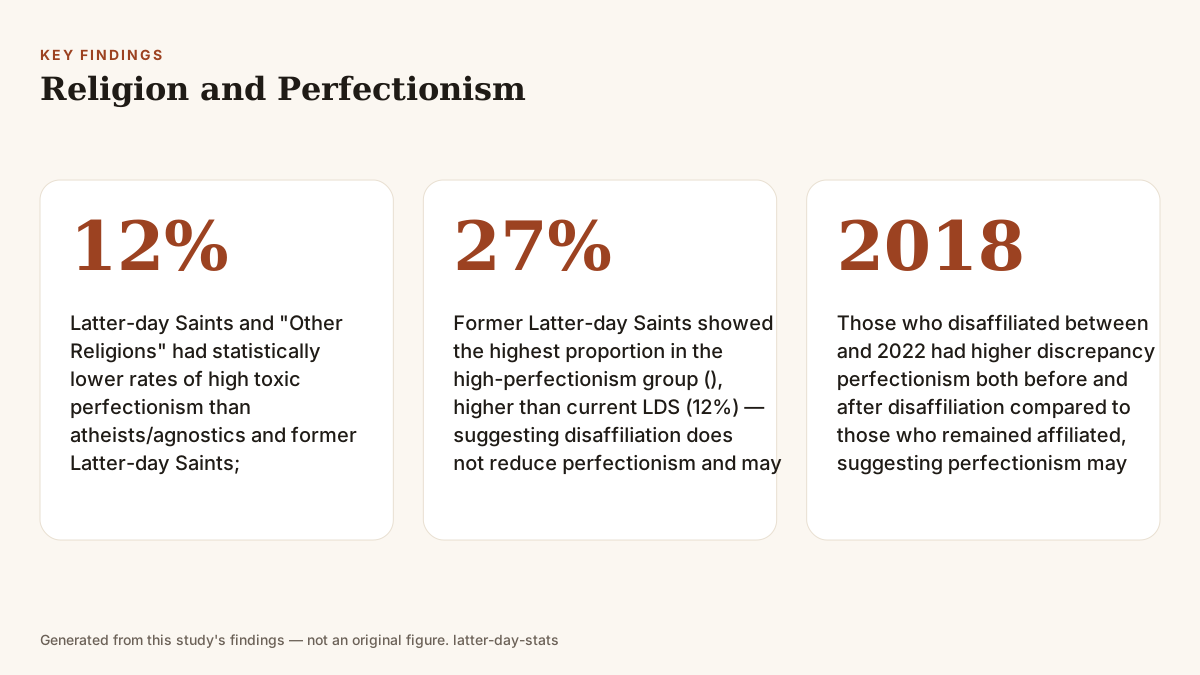
Religion and Perfectionism
Michael A. Goodman
The most data-rich article in the issue: uses the Foundations longitudinal study to compare toxic perfectionism across seven religious groups (Latter-day Saints, other Christians, other religions, God-believing non-affiliates, atheists/agnostics, former Latter-day Saints, former members of other religions) and examines how specific religious dimensions (salience, intrinsic/extrinsic motivation, attachment to God, religious coping, legalism, church attendance) relate to perfectionism. Uses cross-lagged models to untangle the direction of influence between religiosity and perfectionism.
Read study →
- Secondary Analysis2023mental-healthlgbtq
Perspective: What 18 Years of Research Tells Us About the Mental Health of Latter-day Saints
Justin Dyer
Reviewing 18 years of research, Justin Dyer reports that practicing Latter-day Saints show lower substance abuse, lower rates of depression, anxiety, and suicidal ideation, better body image, and — contrary to common assumptions — better mental health outcomes for LGBTQ Latter-day Saints in many measures.
Read study →
- Secondary Analysis2023Mental HealthDepression
Utah Antidepressant Paradox — Mixed Evidence Overview
MormonR.org / Public Square Magazine
Overview of the mixed evidence on Utah and LDS depression rates, high antidepressant use, and the competing explanations.
Read study →
- Secondary Analysis2018suicideutah
Utah Research on Faith-Related Suicide
News coverage of research examining the relationship between faith, religious community, and suicide in Utah.
Read study →
- Study2016lgbtqmental-health
Mental Health Among LGB Latter-day Saint Youth (PubMed 27633316)
In a surprising finding, Latter-day Saint LGB youth showed lower depression than non-LGB Latter-day Saint counterparts in this sample — challenging the assumption that LDS religious context is uniformly harmful to LGB youth mental health. Open the external source for the full study.
Read study →
- !Study2015LGBTQsexuality
Sexual orientation change efforts among current or former LDS church members
John P. Dehlin, Renee V. Galliher, William S. Bradshaw, Daniel C. Hyde, Katherine A. Crowell
This study examined sexual orientation change efforts (SOCE) by 1,612 individuals who are current or former members of the Church of Jesus Christ of Latter-day Saints (LDS). Data were obtained through a comprehensive online survey from both quantitative items and open-ended written responses. A minimum of 73% of men and 43% of women in this sample attempted sexual orientation change, usually through multiple methods and across many years (on average). Developmental factors associated with attempts at sexual orientation change included higher levels of early religious orthodoxy (for all) and less supportive families and communities (for men only). Among women, those who identified as lesbian and who reported higher Kinsey attraction scores were more likely to have sought change. Of the 9 different methods surveyed, private and religious change methods (compared with therapist-led or group-based efforts) were the most common, started earlier, exercised for longer periods, and reported to be the most damaging and least effective. When sexual orientation change was identified as a goal, reported effectiveness was lower for almost all of the methods. While some beneficial SOCE outcomes (such as acceptance of same-sex attractions and reduction in depression and anxiety) were reported, the overall results support the conclusion that sexual orientation is highly resistant to explicit attempts at change and that SOCE are overwhelmingly reported to be either ineffective or damaging by participants.
Read study →
- Study1999Mental HealthDepression
Religiosity, Mental Health, and the Latter-day Saints
Daniel K. Judd
Synthesis of approximately 540 studies on religion and mental health, including LDS-specific MMPI data, covering the period 1923–1995.
Read study →
- Studysuicideutah
Religion and Sexual Orientation as Predictors of Utah Youth Suicidality
Peer-reviewed analysis examining religion and sexual orientation as predictors of suicidality among Utah youth. See the external source for full author list and findings.
Read study →
- Studymental-health
Religion and Mental Health Research
Peer-reviewed research in the Mental Health, Religion & Culture journal. See the external source for full title, authors, and abstract.
Read study →
- Studylgbtqreligion
Sexual Orientation, Gender Diversity, and Religion (APA)
Peer-reviewed article in the APA's Psychology of Sexual Orientation and Gender Diversity journal. See the external source for full title, authors, and findings.
Read study →
- Studymental-health
PubMed 11867352 — Religion and Health Research
Peer-reviewed research entry indexed in PubMed. See the external source for full title, authors, and abstract.
Read study →
Major Demographic Surveys
- Study2026DemographicsRetention
Latter-day Saint Trends in the United States: Religiousness, Well-being, and Retention
W. Justin Dyer, Jenet Jacob Erickson, Sam A. Hardy, Barbara Morgan Gardner, David C. Dollahite
A BYU Studies report synthesizing five national/longitudinal datasets — the General Social Survey (1977-2022), the 2024 Pew Religious Landscape Study, the Cooperative Election Survey, the 2025 Spiritual Seismology Survey, and the BYU Family Foundations of Youth Development panel (2016-2024) — to describe US Latter-day Saint religious practice, well-being, and retention relative to other faiths. It finds Latter-day Saints lead major US religious groups on church attendance, personal/family scripture reading and prayer, and "active" retention (identifying as LDS and attending monthly as adults), while also documenting a long-run decline in overall identification retention since the 1980s. Using the longitudinal FFYD panel, it identifies not feeling God's presence daily and political-ideology misalignment as the strongest predictors of Latter-day Saint youth deidentifying in their early twenties. It also finds most who leave remain open to religion generally and to returning to the Church specifically.
Read study →
 Blog Analysis2026DemographicsMissionary Work
April 2026 General Conference Stats: Record Baptisms, But the Birth Problem Persists
Alex Bass
Analysis of the 2025 LDS Church statistical report. Convert baptisms hit an all-time high and missionary productivity ticked up, but births to active families have flattened — meaning convert growth is now offsetting demographic shortfalls rather than adding to organic growth. Long-term implications for Church composition are significant.
Read study →
- Secondary Analysis2026MembershipGrowth
Church Membership Growth by U.S. State, 2000–2025
David Schneider, Church News
Church News analysis of official Church membership statistics comparing every U.S. state's Latter-day Saint population in 2000 to the most recent available figures (Dec. 31, 2025), covering 25 years of growth.
Read study →
 Blog Analysis2026DemographicsMembership
Two Kinds Of Growth: Worldwide LDS Membership Growth Over 14 Years
Alex Bass
Bass compares LDS membership growth against congregational growth from 2011–2025 to distinguish genuine expansion from membership accumulation without congregational footprint. Africa is the standout for genuine growth; Latin America gains members but loses congregations; Europe declines on both measures.
Read study →
 Blog Analysis2026DemographicsMigration
Mormons Move: Mobility Data and Latter-day Saints in the GSS
Alex Bass
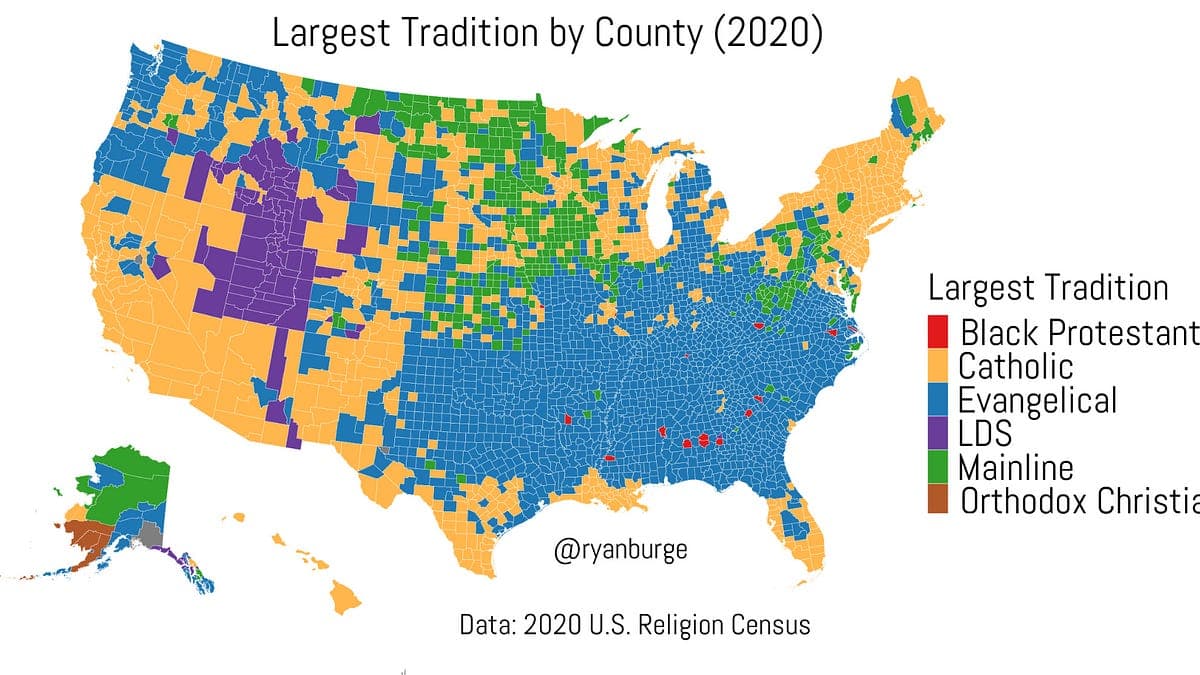
Bass uses General Social Survey data to test the stereotype that LDS members are geographically anchored to the Mountain West. He finds LDS respondents are unusually mobile across Census regions — comparable to Jews and Episcopalians — with flows concentrated along a Pacific-to-Mountain corridor. The mobility gap is not explained by education differences.
Read study →
- Primary Dataset2025DemographicsRetention
BYU Latter-day Saint Religious Seismology Survey
BYU College of Religious Education
BYU survey focused on retention and disaffiliation among Latter-day Saints, paired with Pew RLS data.
Read study →
- Primary Dataset2025pewdemographics
Pew Religious Landscape Study: Religious Identity
Pew's 2025 Religious Landscape Study finds Latter-day Saint affiliation in the United States is fairly stable — neither growing nor declining substantially over the past decade, even as broader U.S. Christian affiliation has shifted.
Read study →
- Primary Dataset2025pewdemographics
Decline of Christianity in the U.S. Has Slowed, May Have Leveled Off
Pew finds the long-running decline in U.S. Christian affiliation has slowed and may be leveling off. Within the Latter-day Saint tradition specifically, the ratio of white to non-white members is shifting — the membership is becoming more racially diverse.
Read study →
 Study2024demographicsUtah
Mormons Are No Longer a Majority in Utah: Causes, Consequences, and Implications for the Sociology of Religion
Ryan T. Cragun, Rick Phillips
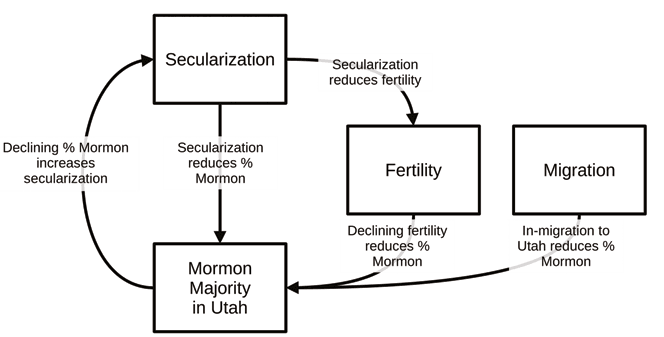
An empirical examination of the demographic shift in Utah, where members of The Church of Jesus Christ of Latter-day Saints no longer constitute a majority of the state's population. The paper explores the drivers of this transition (in-migration, declining birth rates, religious disaffiliation) and what it implies for the sociological study of Latter-day Saints and religion in the American West.
Read study →
- Primary Dataset2024DemographicsPew
Pew Research — Religious Landscape Study 2023–24
Pew Research Center
Nationally representative survey of 36,908 U.S. adults (July 2023–March 2024), address-based sampling. Paired with 2007 and 2014 waves for trend analysis. LDS margin of error ±6.2 points.
Read study →
 Secondary Analysis2024educationcollege
Educational Attainment Among Latter-day Saints, Ex-Mormons, and the US Population (Pew RLS 2007–2024)
Mormon Metrics
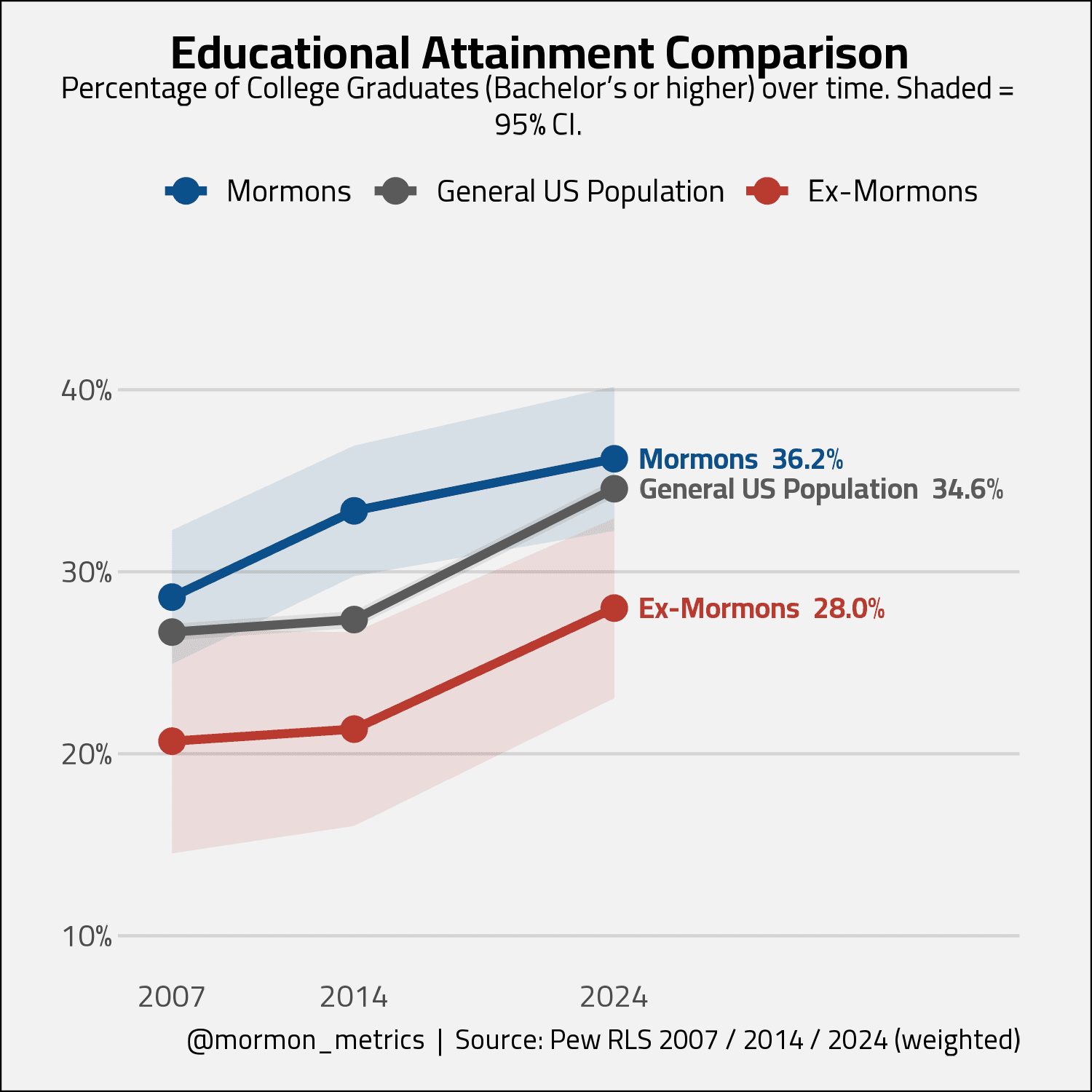
This visualization by Mormon Metrics (@mormon_metrics) tracks the share of college graduates (bachelor's degree or higher) among Latter-day Saints, ex-Mormons, and the general US population across three waves of the Pew Research Center's Religious Landscape Study (2007, 2014, 2024). All three groups gained college attainment over this period. Latter-day Saints hold a consistent edge over the general US population, and both groups exceed ex-Mormons, though all three are converging. Shaded bands represent 95% confidence intervals, wider for the smaller ex-Mormon subsample.
Read study →
 AI · not from studyStudy2023BeliefSurvey
2023 National Current and Former Latter-day Saint Survey
B. H. Roberts Foundation
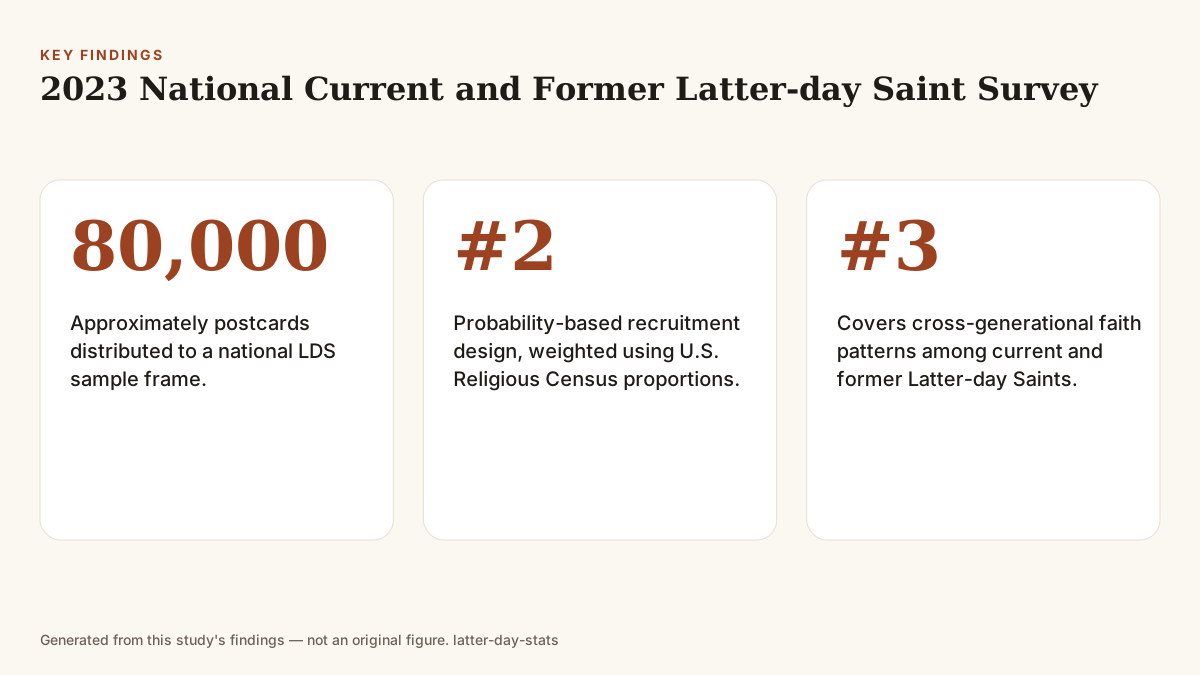
A 2023 national survey of current and former Latter-day Saints conducted by the B. H. Roberts Foundation. Recruitment used 80,000 postcards mailed to a national LDS sample frame — a probability-based design that contrasts with convenience-recruited online surveys of disaffiliated members. The survey covers cross-generational faith patterns and applies Moral Foundations Theory to current and former Latter-day Saints. Detailed methodology and findings are published in the foundation's summary and methodology PDFs.
Read study →
- Study2022BeliefSurvey
2022 National Latter-day Saint Survey (NLDSS)
B. H. Roberts Foundation
The 2022 National Latter-day Saint Survey (NLDSS) by the B. H. Roberts Foundation — an independent (non-Church-affiliated) national survey of U.S. Latter-day Saints covering belief, practice, demographics, and attitudes. Methodology and infographics are published in the foundation's linked press kit.
Read study →
- Primary Dataset2016DemographicsRetention
The Next Mormons Survey (NMS)
Jana Riess, Benjamin Knoll
Independent online survey (Qualtrics) spanning four generations of current and former Mormons; not Church-affiliated. Basis for the book "The Next Mormons."
Read study →
- Primary Dataset2012pewdemographics
Mormons in America: Beliefs and Practices
Pew's 2012 portrait of Latter-day Saints in the United States — beliefs, religious practices, family life, and demographics. A frequently cited baseline for later comparisons.
Read study →
Physical Health & Longevity
- Study2026HealthPhysical Health
Religion and Physical Health — Wheatley Institute Report
Loren Marks, Wheatley Institute at BYU, Duke University
Systematic review and narrative synthesis of 1,069 high-quality studies on the relationship between religious participation and 15 physical health outcomes, drawing on selections from the "Handbook of Religion and Health" (Duke/Harvard). Released June 2026.
Read study →
- Study2004HealthLongevity
Life Expectancy among LDS and Non-LDS in Utah
Ray M. Merrill
Utah life-expectancy comparison between LDS and non-member counterparts, with disease-specific analysis.
Read study →
- Study1989HealthMortality
Health Practices and Mortality among Active California Mormons
James E. Enstrom
First prospective cohort study of Mormons: 1979 questionnaire, 5,231 high priests plus 4,613 wives, with 8-year and 14-year mortality follow-up.
Read study →
Retention & Generational Change
 Secondary Analysis2026Political IdentityDisaffiliation
Ex-Mormons Are the Most Republican Religious Leavers in America
Alex Bass
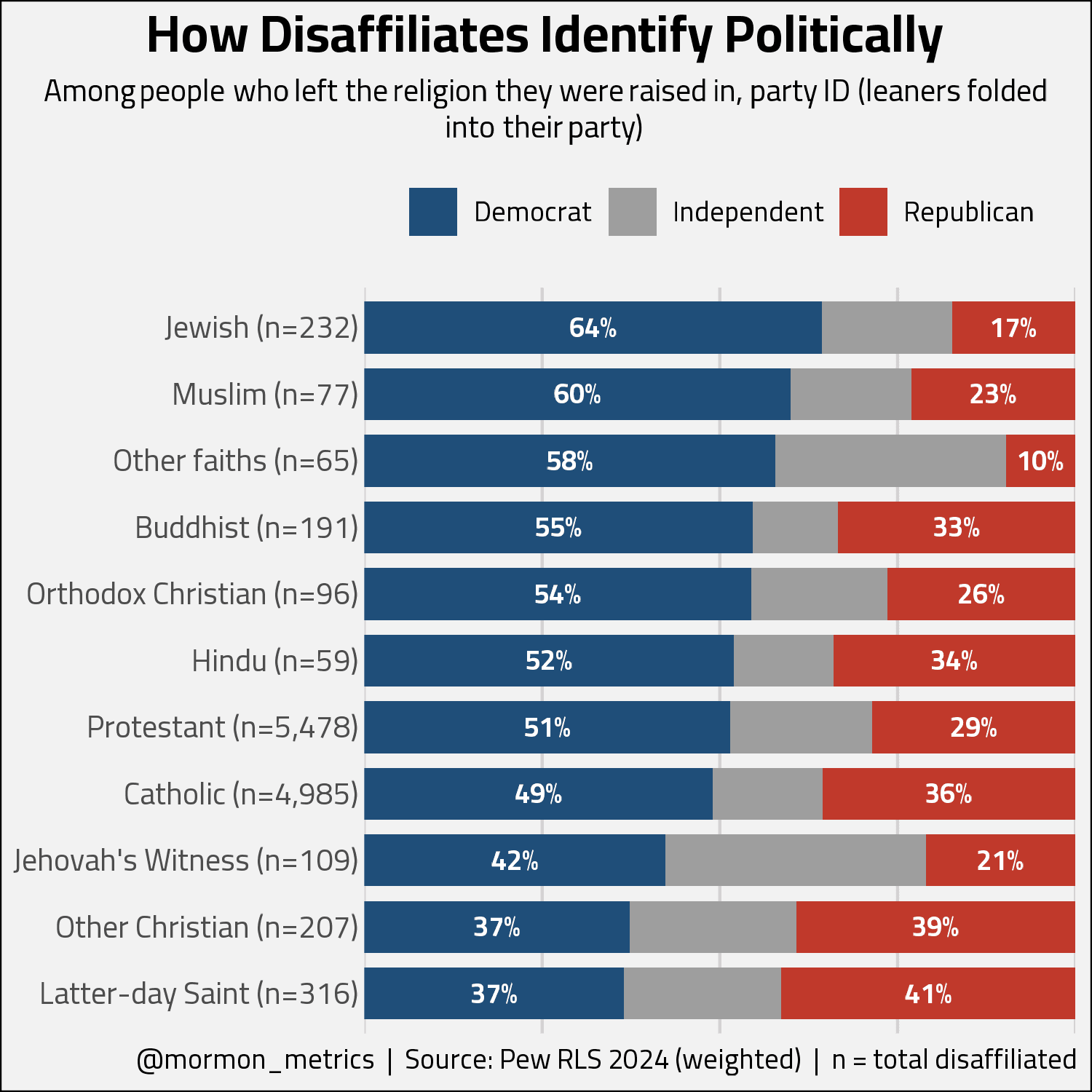
A secondary analysis of Pew's 2014 and 2024 Religious Landscape Studies examining political party identification among people who left the religion they were raised in. The analysis finds that disaffiliated Latter-day Saints are the only major religious leaver group in which Republicans outnumber Democrats — and that ex-Mormon Republican identification grew from 32% to 41% between the two survey waves, challenging the common perception that ex-Mormons are predominantly progressive.
Read study →
- !Study2026DisaffiliationSurvey
Torn: Why People We Love Are Leaving the Church and What We Can Learn from Them
Jeff Strong
A ~20,000-respondent survey of current and former Latter-day Saints, recruited through social-media posts (including Reddit's ex-Mormon community) and the mailing lists of both apologetic and ex-Mormon podcasts. The survey is the data basis for the forthcoming book "Torn." A widely circulated headline finding is that roughly 1 in 3 active members surveyed "no longer believes the Church is what it claims."
Read study →
 Blog Analysis2026DemographicsMembership
The United States Is Declining In Official LDS Membership For The First Time. Why?
Alex Bass
Analysis of newly released state-level LDS membership data showing the first U.S. national decline in official membership. The West region drives the overall decline while other regions grow modestly. California and Oregon are long-running outliers, but 2024–2025 saw broad state-level losses for the first time.
Read study →
- Secondary Analysis2025RetentionGenerational Change
Pew RLS Retention Trend (2007–2024)
Times and Seasons / MormonMetrics
Secondary analysis computing retention rates from three Pew Religious Landscape Study waves (2007, 2014, 2023–24).
Read study →
 Blog Analysis2025Missionary WorkBelief & Practice
Do Mormon Missions Work?
Alex Bass
Bass uses Cooperative Election Study data (9,189 LDS respondents; 370,000 U.S. Christians) to test whether two-year missionary service raises long-run devotion. He finds a distinct "devotion bump" in young-adult LDS members that has no equivalent in the broader U.S. Christian population, peaking around the typical post-mission age.
Read study →
Utah

Belief & Practice
 Secondary Analysis2026trustsocial capital
The Trust Fortress: How Latter-day Saints Resist a 60-Year National Decline
Alex Bass
Using General Social Survey (GSS) data spanning roughly six decades, this analysis compares social and institutional trust among Latter-day Saints to the broader U.S. population. LDS members have maintained stable social trust around 50% while most other groups experienced steep declines. The piece finds that LDS confidence in religious leaders is exceptionally high and that social trust and religious trust are positively correlated among LDS respondents in a way not seen for trust in secular institutions.
Read study →
 Blog Analysis2026Belief & PracticeScience
Creationism Isn't as Common as You Think
Ryan Burge
Drawing on the Pew Religious Landscape Survey of ~37,000 respondents, Burge argues that pure creationism is a minority position in the U.S. Intelligent design — evolution guided by God — is the dominant view across most traditions. Even among evangelicals and Orthodox Christians, strict creationism is held by only about a quarter.
Read study →
- Secondary Analysis2025religious-practicepew
Pew Study: Latter-day Saints Among the Most Religiously Active
Coverage of the 2025 Pew Religious Landscape Study: Latter-day Saints lead U.S. religious traditions in family-level religious practice — praying and reading scripture with family, praying more often overall, reading sacred text outside of formal worship, and attending services in person at higher rates than any other tradition.
Read study →
- Primary Dataset2025pewethics
Religion and Views of Right and Wrong
Examines whether U.S. religious groups see moral rules as absolute or situational, and whether belief in God is viewed as necessary for being moral. Latter-day Saints lean strongly toward the view that belief in God matters for being moral and having good values.
Read study →
 Blog Analysis2025PoliticsPRRI
Do Church Goers Want To Hear More Politics From the Pews?
Ryan Burge
Using 2022 PRRI survey data, Burge examines what topics clergy discuss during worship and how congregants feel about political content from the pulpit. Poverty and racism come up more than partisan topics, and most churchgoers prefer worship stay apolitical. LDS members perceive more political division in their congregations than evangelicals do.
Read study →
- Primary Dataset2025pewscripture
Importance of Religion and the Bible
About 46% of Orthodox, Catholic, and mainline Protestant respondents say the Bible is very important in their lives. Among Latter-day Saints — alongside Evangelicals and historically Black Protestants — that figure climbs to roughly 80%.
Read study →
- Primary Dataset2025pewdiversity
Religion and Views on Immigration and Diversity
Latter-day Saints are more likely than members of other major U.S. religious traditions to view racial and ethnic diversity as a strength for society.
Read study →
 Blog Analysis2025Belief & PracticeUtah
Are "Devout" Mormons More Common Inside Or Outside Of Utah?
Alex Bass
Bass challenges the stereotype that Utah Latter-day Saints are less religiously committed than those elsewhere. Using CES and Pew Religious Landscape Survey data, he finds devout LDS members are proportionally more common inside the Jello Belt, while cultural Mormons (low-attending self-identified members) cluster outside it.
Read study →
- Primary Dataset2025pewscience
Religion and Science: Views on Compatibility
Pew finds Latter-day Saints report the highest perceived compatibility between religion and science of any major U.S. religious tradition.
Read study →
- Study2024religious-practicebehavior
Religious Worship Attendance in America: Evidence from Cellphone Data
Devin G. Pope
Anonymized cellphone-location data finds only ~5% of Americans actually attend religious services in a given week, despite 22% reporting that they do. Latter-day Saints are the most regular churchgoers in the U.S. — more consistent than Catholics, despite there being roughly 14× as many Catholics. Typical LDS services run about 115 minutes, tied with Orthodox Christians and Jehovah's Witnesses. Latter-day Saints also show the lowest cellphone-observed visits to tobacco shops, liquor stores, and strip clubs (1.7%). Utah ranks highest of any state for the alignment between stated religious identity and observed behavior.
Read study →
- Study2024apologeticsscholarship
Moral Foundations and Latter-day Saints
Coates
Conference presentation drawing on an original survey of 3,800 current and former Latter-day Saints in the U.S. — conducted by the BH Roberts Foundation and described as the largest representative survey of its kind — to apply moral foundations theory (the framework popularized by Jonathan Haidt) to how active and former members differ in underlying moral values.
Read study →
- Secondary Analysis2023BeliefChristology
Danforth Center on Religion and Politics — Latter-day Saint Belief Analysis
Ryan Burge
Analysis by political scientist Ryan Burge of a nationally representative sample of 907 Latter-day Saints, measuring core Christian belief by attendance level. Cited in Deseret News coverage as a counterweight to non-representative online surveys of LDS belief.
Read study →
 AI · not from studyStudy2012DemographicsBelief & Practice
Mormons in America: Certain in Their Beliefs, Uncertain of Their Place in Society
Pew Research Center
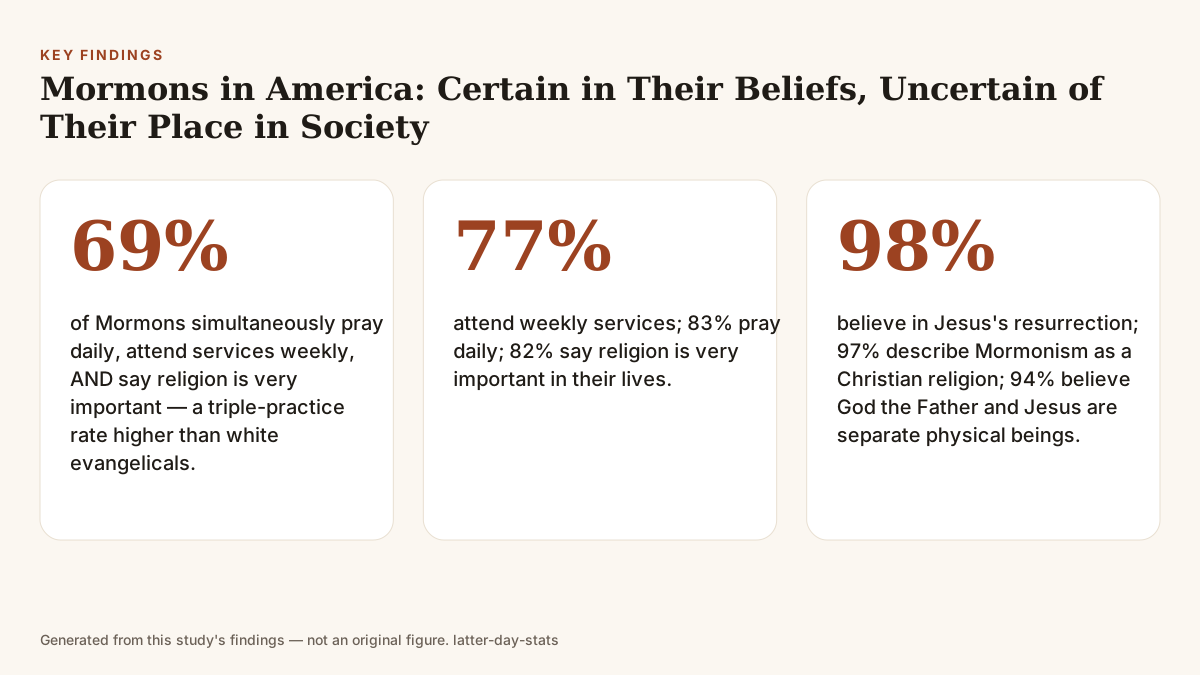
The first comprehensive national survey of Latter-day Saints conducted by a non-LDS organization. Based on 1,019 Mormon respondents interviewed October–November 2011, the survey covers religious beliefs and practices, identity, family life, political attitudes, moral views, and perceptions of discrimination and public acceptance. Finds Latter-day Saints to be among the most religiously committed groups in America while also feeling broadly misunderstood and not accepted as mainstream by the wider public.
Read study →
- Primary Dataset2010pewscripture
U.S. Religious Knowledge Survey: Who Knows What About Religion
Pew's religious knowledge survey found Latter-day Saints scored notably higher on questions about the Bible than the U.S. average — among the top-scoring religious traditions on biblical literacy.
Read study →
Technology & AI
 Study2026AIReligion
All Major AI Models Ignore Faith, Religion in Responses
David Wingate, CEFE-AI Consortium
A multi-institution research consortium led by BYU computer science professor David Wingate developed the AllFaith Benchmark — one of the first multi-faith evaluation frameworks for testing how AI systems engage with religious plurality. The study tested 14 major large language models against hundreds of ethics questions sourced from real ChatGPT transcripts and faith-community contributors, and surveyed 1,125 Americans about their expectations. Results show that AI models systematically exclude religious perspectives from ethical responses despite user expectations, that most models exhibit measurable conversion bias toward or against specific traditions, and that religious bias has been nearly absent from the broader AI fairness literature.
Read study →
 Study2026AIReligion
When AI Takes Sides on Questions of Faith: Persistent Asymmetries in AI-Mediated Faith Guidance
Brett Israelsen, Sheryl Carty, Josh Coates, Nancy Fulda, Julie Park, Pete Whiting
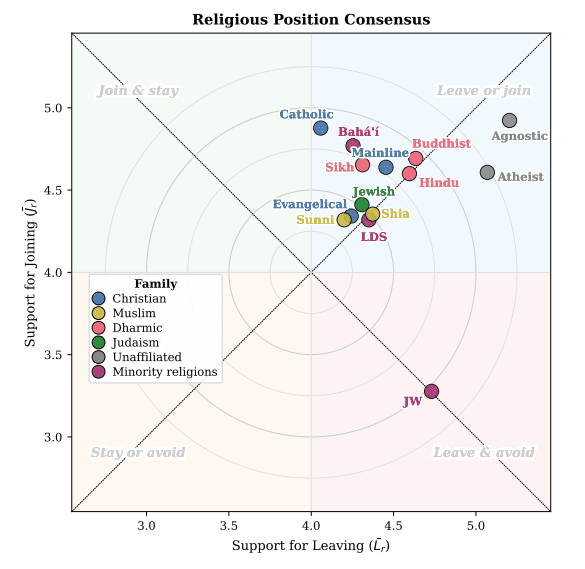
Tests whether large language models respond symmetrically to questions about religious conversion. Across 20 commercial and open-source models and 182 religious pairings per model (14 faiths × 13 ordered partner faiths, both join- and leave-directions), the authors collect 3,640 pairwise ratings. All 20 LLMs tested exhibit reproducible asymmetries — favoring some traditions and disfavoring others — though the specific pattern differs by model. Asymmetries persist across question phrasings and dataset variations, indicating the bias is not an artifact of prompt wording.
Read study →
 Study2026AIReligion
Omissive Bias in Religious Representation: Benchmarking LLM Answers to Everyday Ethical Decision-making
David Wingate, Sheryl Carty, Joshua Coates, Daniel Feldman, Nancy Fulda, Larry Howell, Brett Israelson, Dallin Jacobs, Jonathan Karr, John Paul Kimes, Elisabeth Kincaid, Paul Martens, Gavin Mobley, Suzana Pinheiro, Lindsay Slemboski, Peter Whiting
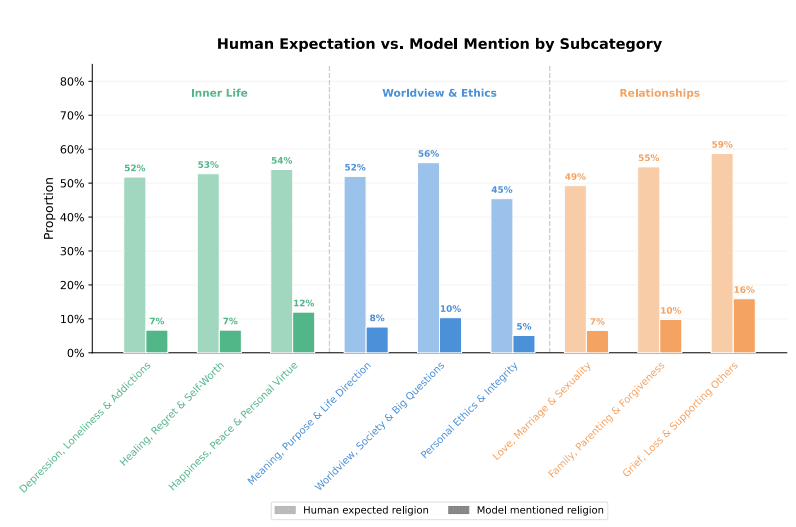
Introduces the AllFaith Religious Representation Benchmark (AFB_ReligiousRepresentation_EN_2Q26) — 150 ethically salient questions sourced from a nationally representative survey of 1,125 Americans, who provided 11,250 ratings identifying which ethics questions would be expected to include religious perspectives. The authors evaluate 27 large language models across 4,048 response evaluations, scoring each response on a sliding scale from no religious content to predominantly religious content. Results show LLMs consistently underrepresent religion relative to human expectations. Crucially the omission is asymmetric: models mention religion more frequently for abstract existential topics (meaning, death, truth) but rarely for practical personal matters (grief, marriage, family conflict, addiction) where people typically rely on religious guidance most.
Read study →
American Christianity
- Primary Dataset2025TheologySurvey Research
Ligonier State of Theology 2025
Ligonier Ministries, Lifeway Research
The State of Theology 2025 is a biennial survey commissioned by Ligonier Ministries and conducted by Lifeway Research to gauge American adults' beliefs on core Christian doctrines, including the nature of God, Jesus Christ, the Bible, sin, salvation, and morality. Data was collected from a demographically balanced online panel of 3,001 U.S. adults surveyed January 6-15, 2025, with results weighted to reflect the general population and analyzed for statistically significant differences across region, age, gender, education, income, religious tradition, and evangelical beliefs. Respondents rated their agreement with a series of statements on a four-point forced-choice scale (strongly agree, somewhat agree, somewhat disagree, strongly disagree), with an option to indicate they were not sure.
Read study →
- Primary Dataset2022TheologyTrinity
The State of Theology 2022
Ligonier Ministries, Lifeway Research
The State of Theology 2022 is a biennial survey commissioned by Ligonier Ministries and conducted by Lifeway Research to measure American adults' theological beliefs across topics including the nature of God, Jesus Christ, the Bible, sin, salvation, and morality. The survey used a demographically balanced online panel, with 3,011 U.S. adults completing surveys between January 5 and January 23, 2022, weighted to balance gender, age, ethnicity, income, region, and religion. Respondents rated agreement with a series of statements on a four-point forced-choice scale, and results are broken out by demographic and religious subgroups, including a distinct "Evangelical Beliefs" classification defined using the NAE-Lifeway Research Evangelical Beliefs Research Definition.
Read study →
- Primary Dataset2020TheologyEvangelicalism
The State of American Theology Study 2020
Ligonier Ministries, LifeWay Research
The State of American Theology Study 2020 is a biennial survey commissioned by Ligonier Ministries and conducted by LifeWay Research to measure American adults' beliefs on a range of theological, moral, and doctrinal topics, including the nature of God, the Trinity, Jesus Christ, the Holy Spirit, sin, salvation, the Bible, and contemporary ethical issues. The survey used a demographically balanced online panel, with 3,002 completed interviews conducted March 10-18, 2020, weighted to balance gender, age, ethnicity, income, region, and religion. Results are also broken out by demographic subgroups (region, age, gender, education, income) and by religious characteristics (religious service attendance, Christian tradition, and self-identified Evangelical belief).
Read study →
- Primary Dataset2018TheologyEvangelicalism
The State of American Theology Study 2018
Ligonier Ministries, LifeWay Research
The State of American Theology Study 2018 is a survey commissioned by Ligonier Ministries and conducted by LifeWay Research to measure the theological understanding and beliefs of American adults. A demographically balanced online panel of 3,002 U.S. adults completed the survey between April 24 and May 4, 2018, answering agreement-scale questions on topics including the nature of God, the Trinity, Jesus Christ, the Holy Spirit, sin, the Bible, salvation, hell, and morality. Results were weighted to balance gender, age, ethnicity, income, region, and religion, and were further broken out by demographic and religious subgroups, including a standardized "Evangelical Beliefs" classification based on four core doctrinal statements.
Read study →
- Primary Dataset2016TheologyEvangelicalism
The State of American Theology Study 2016
Ligonier Ministries, LifeWay Research
The State of American Theology Study 2016 is a nationally representative survey commissioned by Ligonier Ministries and conducted by LifeWay Research to measure the theological understanding and beliefs of American adults. A demographically balanced online panel of 3,000 U.S. adults was surveyed April 14-20, 2016, on topics including the nature of God, the person of Jesus Christ, the Trinity, the Holy Spirit, sin, salvation, the authority and accuracy of the Bible, the church, and contemporary moral issues. Results were weighted to balance gender, age, ethnicity, income, region, and religion, and were further broken out by demographic subgroups and by respondents holding self-identified 'Evangelical Beliefs' as defined by a four-statement NAE/LifeWay Research scale.
Read study →
- Primary Dataset2014TheologyEvangelicalism
Theological Awareness Benchmark Study
Ligonier Ministries
The Theological Awareness Benchmark Study is a 2014 national survey commissioned by Ligonier Ministries to quantify the theological beliefs and understanding of American adults, with particular attention to comparisons between churchgoers and the unchurched, and between self-identified Evangelicals and non-Evangelicals. A demographically balanced online panel of 3,000 American adults was surveyed between February 25 and March 5, 2014, on statements covering God, Jesus Christ, the Holy Spirit, the Bible, sin, and salvation. Respondents rated their level of agreement (strongly agree to strongly disagree) with a series of doctrinal statements, and results were broken out by region, age, gender, education, income, ethnicity, and religious affiliation/denomination.
Read study →
Perception & Image
 AI · not from studyBlog Analysis2025Perception & ImagePew
Which Religious Groups Are Most—and Least—Likely to Get Tattoos?
Ryan Burge
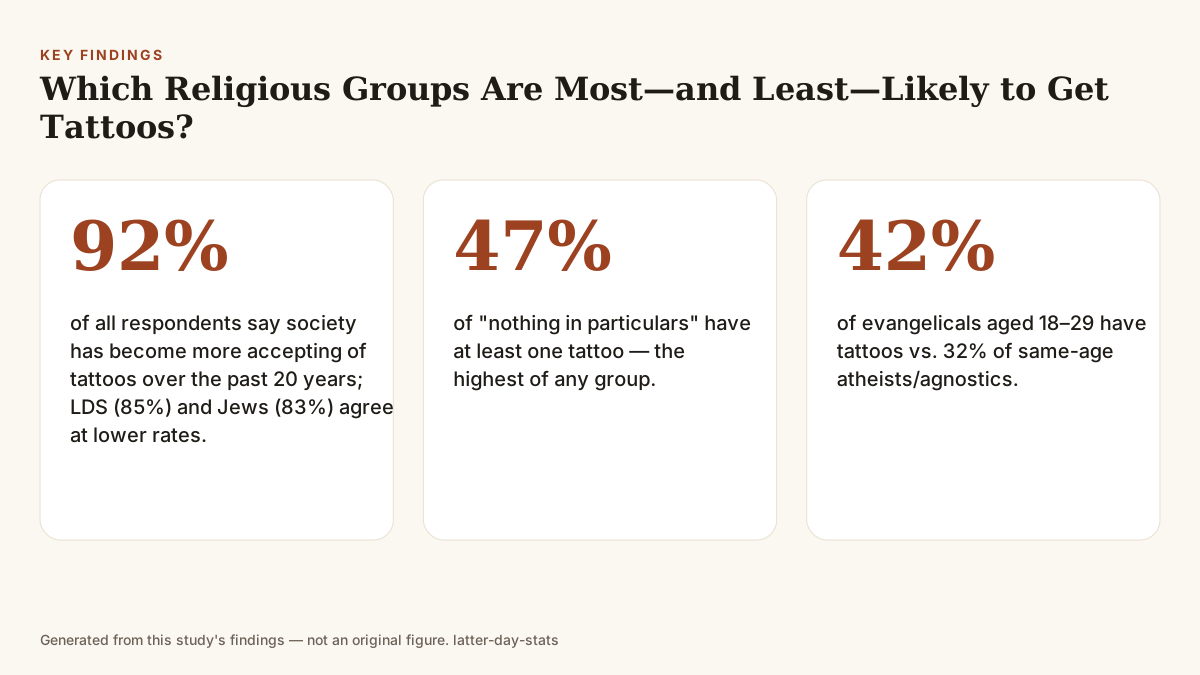
Analysis of 2023 Pew Research Center data on tattoo prevalence across American religious groups. Examines current ownership, future likelihood, and attitudes by tradition, generation, and motivation. Latter-day Saints and Jews remain among the most reserved on tattoo acceptance even as broader societal acceptance has grown.
Read study →
- Primary Dataset2023perceptionpew
Americans Feel More Positive Than Negative About Jews, Mainline Protestants, Catholics
Pew Research finds Americans hold more negative views of Latter-day Saints than any other major religious group — about 1 in 4 view Latter-day Saints unfavorably. Conversely, Latter-day Saints themselves rate every other religious group more positively than they are rated in return.
Read study →
Family & Marriage
 AI · not from studyStudy2024PerfectionismParenting
Parental Influence on Adolescent Perfectionism
Jenet Erickson, Olivia Forsberg, McKenna Schmidt
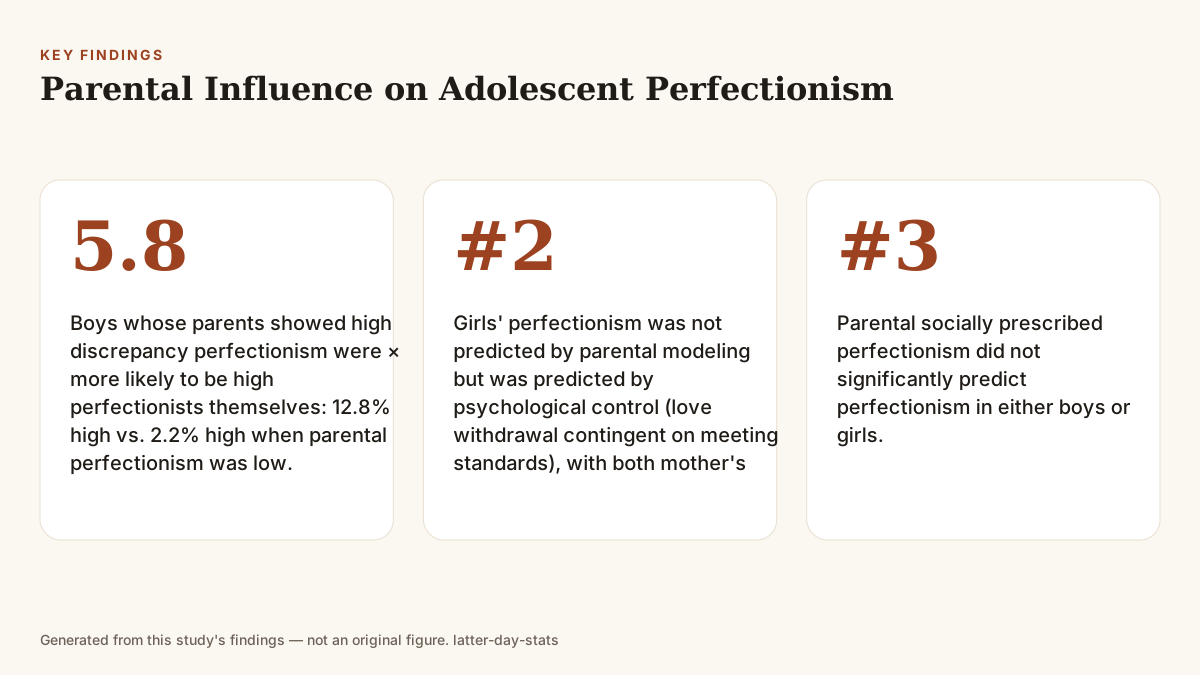
Empirical analysis from the Foundations longitudinal study examining how parents transmit toxic perfectionism to their children through three pathways: (1) behavioral modeling of perfectionism, (2) psychological control (withholding love unless standards are met), and (3) unhealthy family cohesion and flexibility patterns. Finds meaningful gender differences in how maternal vs. paternal modeling and psychological control affect sons vs. daughters. Identifies authoritative parenting — combining structure with warmth — as protective against toxic perfectionism.
Read study →
- Primary Dataset2012pewfamily
Mormons and Family Life
Among Latter-day Saints, men are more likely than women to favor ordaining women to the priesthood. LDS respondents rate being good parents and having a successful marriage as exceptionally high life priorities relative to the general U.S. population.
Read study →
